ID-Identity - A photo project by Susanne Junker
ID-Identity is an interactive long-term project in which people — young and old, women, men, healthy, and ill — paint their faces in shorter or longer sessions and workshops without a mirror, while I photographically document this process. In doing so, the participants place themselves in an unfamiliar situation, because they lose control over an everyday ritual that corresponds to their self-image and beauty ideal, or they apply makeup for the very first time in their lives.
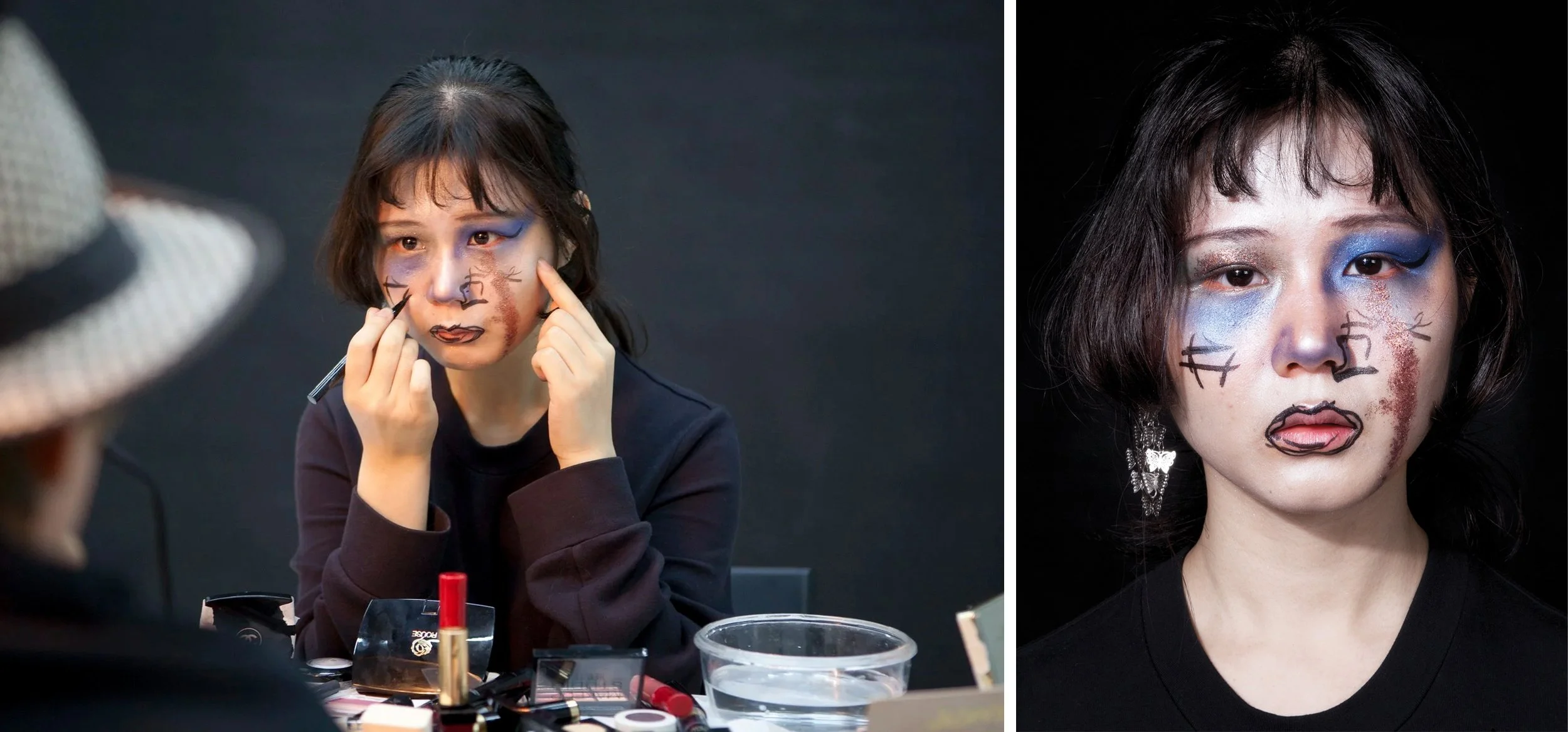
ID-Identity workshop, China Academy of Art, Shanghai, China, 2018 / ID-Identity portrait #I1O5264, 60 x 80 cm, c-print, 2018
Without the possibility of controlling line and color in the mirror, they reveal a great deal about themselves. It takes courage to embrace the imperfect, the eccentric, and the so-called ugly. At the same time, this deviation from the familiar often has a remarkably liberating, freeing, and inspiring effect on many participants. They open up and reveal how much imagination, frustration, resistance, convention, surprise, or freedom they associate with the act of blind makeup application.
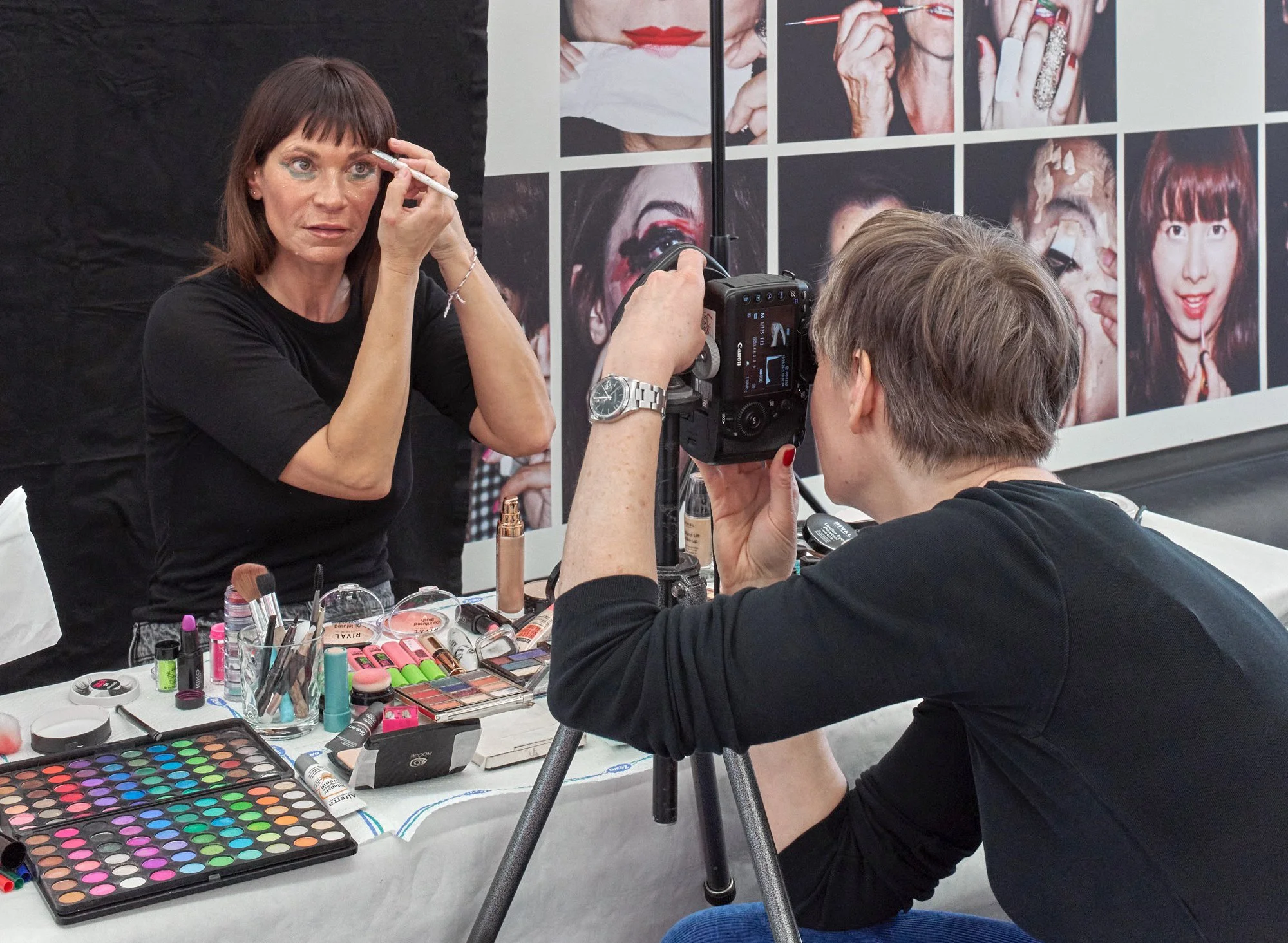
ID-Identity workshop, Augsburg, Germany, 2025
I began the project in 2006 in Shanghai, where I was living at the time. Since then, I have held sessions and workshops in various places around the world, with hundreds of encounters, including in the United States, France, and Spain, as part of my teaching program Me-Art-Me at the China Academy of Art in Shanghai, and most recently in 2025 as part of my major solo exhibition “So What!” at the H1 Center for Contemporary Art in the Glaspalast in Augsburg
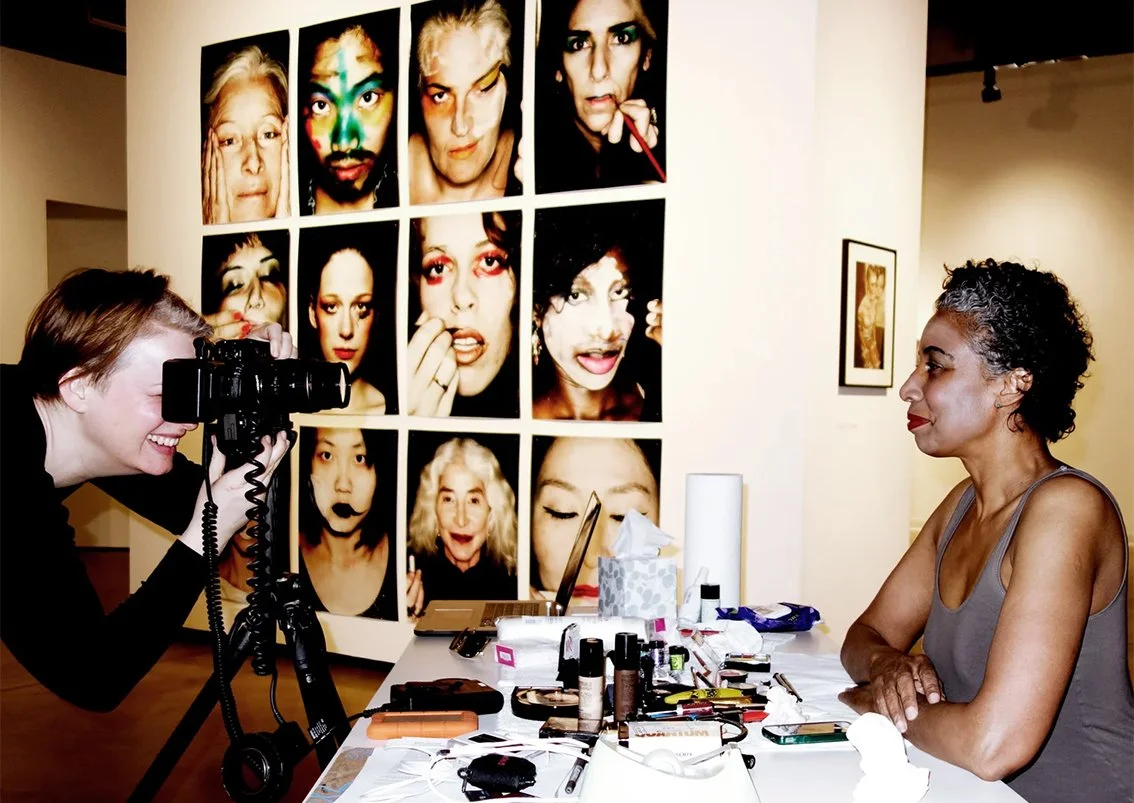
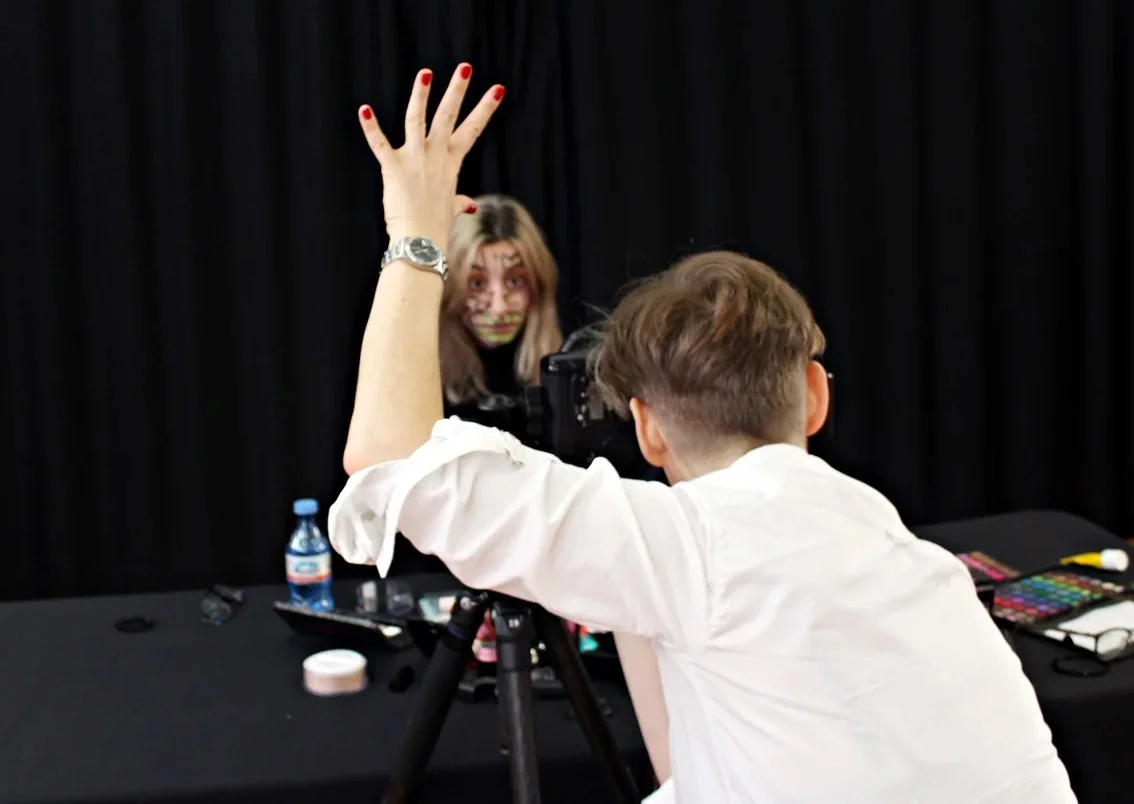
ID-Identity workshop, Denver, USA, 2015 / ID-Identity workshop, Malaga, Spain, 2018
The sessions
For the photo shoots, I provide the participants — and since #MeToo, more and more men have also been signing up for the sessions — with all kinds of makeup materials. The actual photo session then lasts as long as the participants feel necessary. So far, the shortest lasted 30 seconds, and the longest nearly an hour.
Applying make-up
Applying make-up itself is not a particularly delicate process. At times, it almost feels brutal, the way the face is worked over, the skin covered, powdered or painted, the lips, eyelids, and lashes pulled, curved, coated, and colored, lipstick ending up on the eyelids or being dragged across the face like a coarse brush.
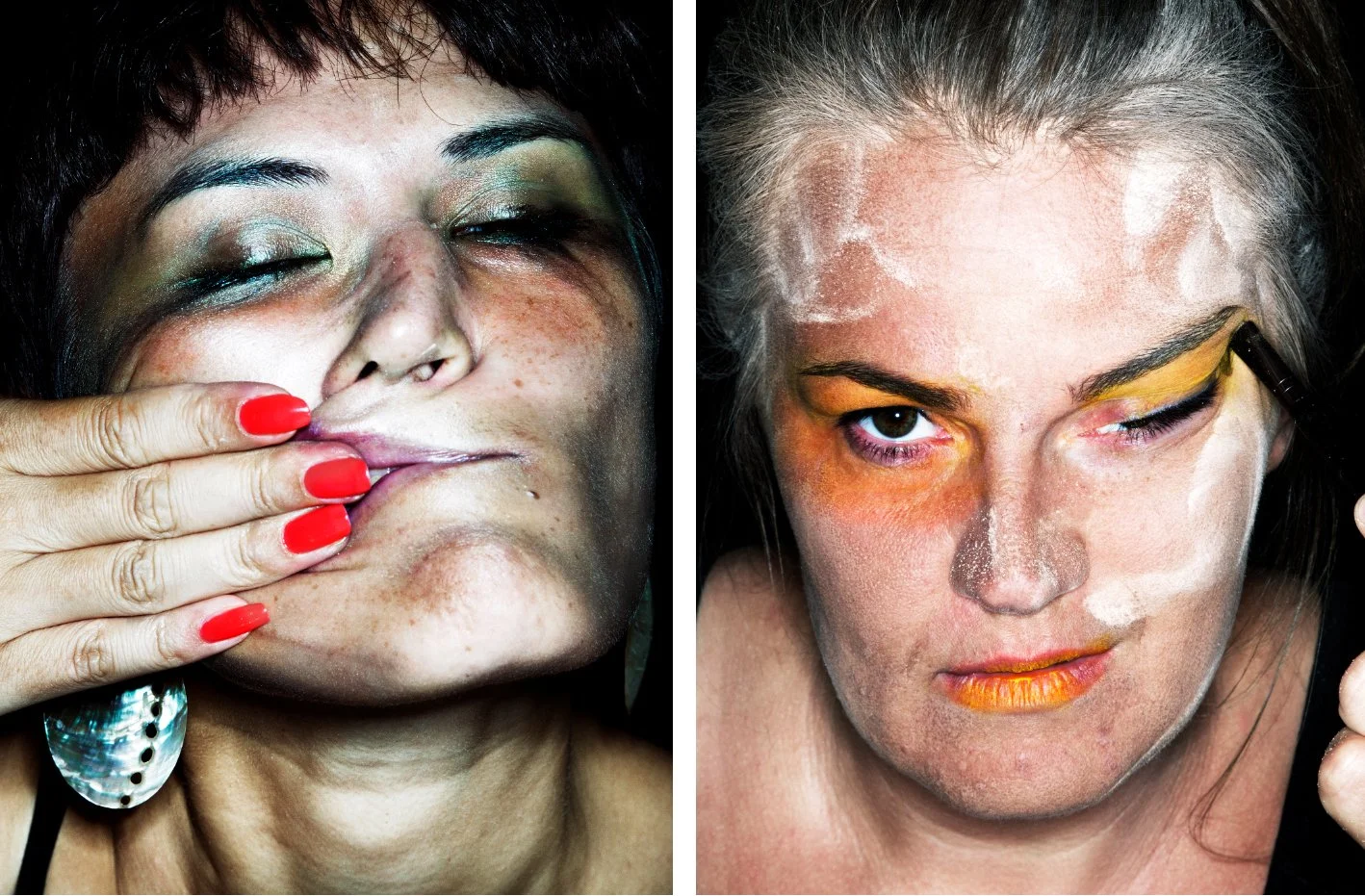
ID-Identity portrait #_I1O0674, 60 x 80 cm, c-print, 2012 / ID-Identity portrait #_I1O7733, 60 x 80 cm, c-print, 2013
Some participants simply imitate their daily routine. But even among women who apply makeup every day and are certain that they produce their so-called “perfect” makeup, the eyeliner goes awry. Others reveal their unconscious through their choice of colors and the order of the products, and they begin to cake on makeup almost compulsively, using it out of a creative impulse. Some display a playful self, others darker traits — some cling to conventional femininity, while others consciously break with it.
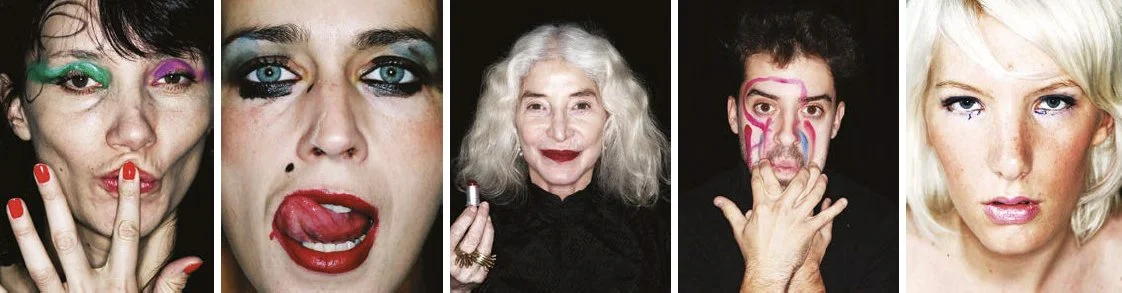
Meanwhile, I sit opposite the participants with my camera and document these intimate moments and the process by which the unmade-up face gradually becomes a very special kind of self-portrait, bearing witness to spontaneous, free, and radical openness, strength, and vivid expression. In their uncontrolled imperfection, the faces radiate a beauty and an aesthetic of their own, impossible to imitate. ID-Identity gives participants the freedom to bravely experience a new facet of themselves. By removing the mirror, we also loosen the shackles of the beauty norms imposed on us and through which we are socialized.
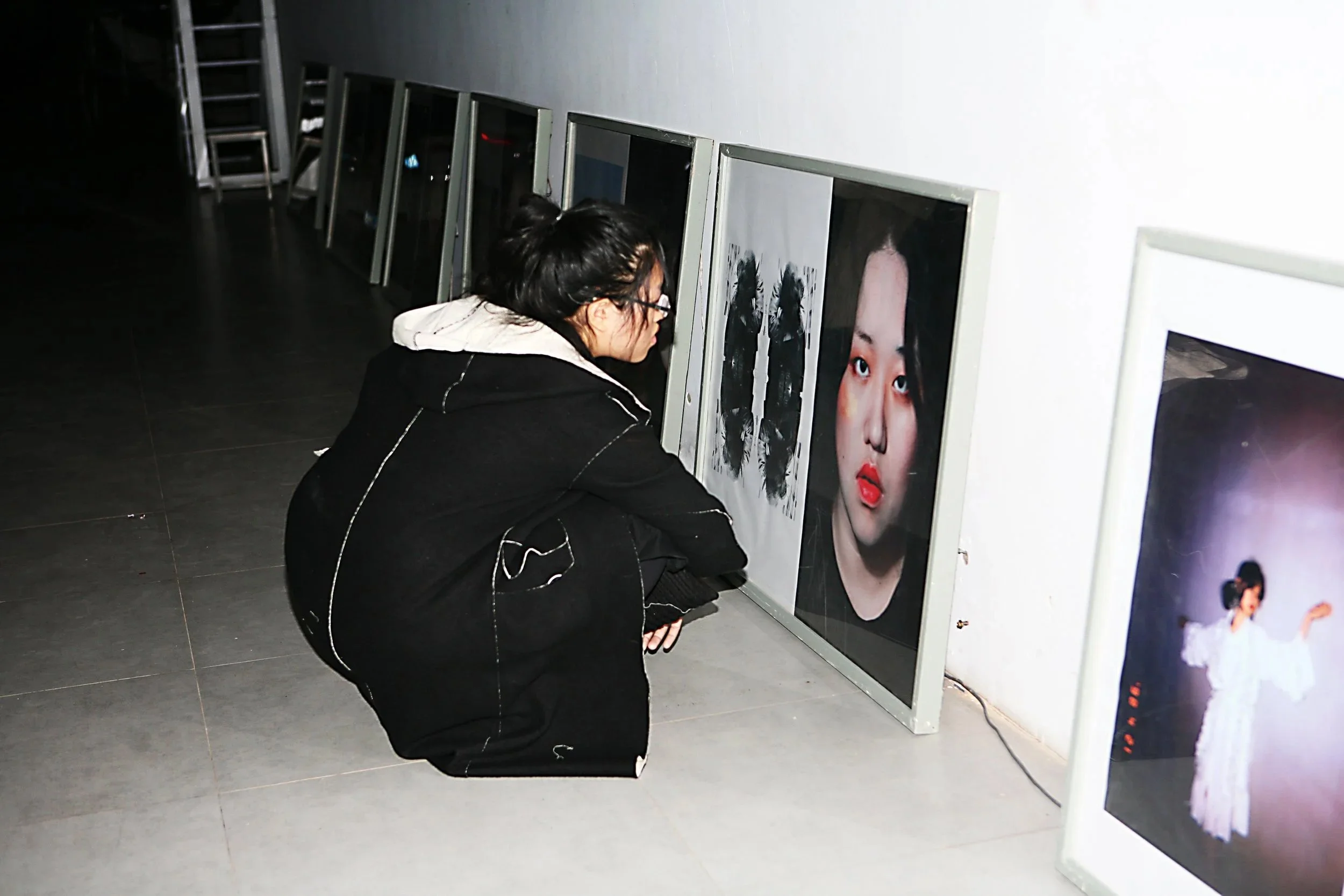
A student of the China Academy of Art is looking at her ID-Identity face, Shanghai, China, 2018
A crucial part of the session is also the exchange with the participants. Often, this quickly turns to their own lives, usually with astonishing openness. Why did they sign up? What do they expect from the photo shoot? Have they prepared anything specific? And finally, the central question: what is beautiful? In this way, these sessions move from the surface into the depths. At the end, when the participants finally look in the mirror again to assess their ID-Identity for themselves, the question naturally arises of how people react to their own appearance — through their behavior and emotions. A participant with an autoimmune disease expressed the course of his illness on his face.
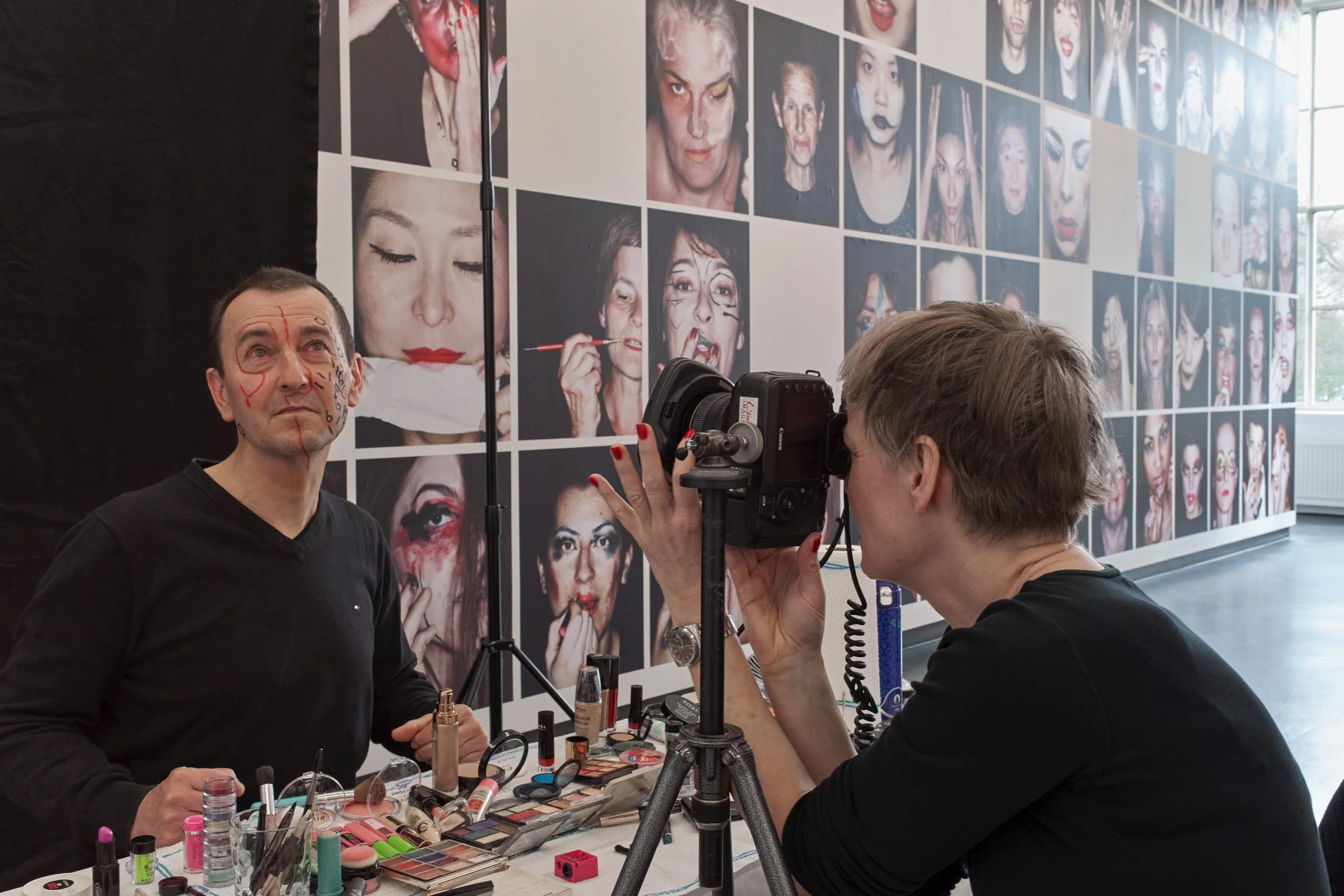
ID-Identity - the session (Photo: Dirk Hund)
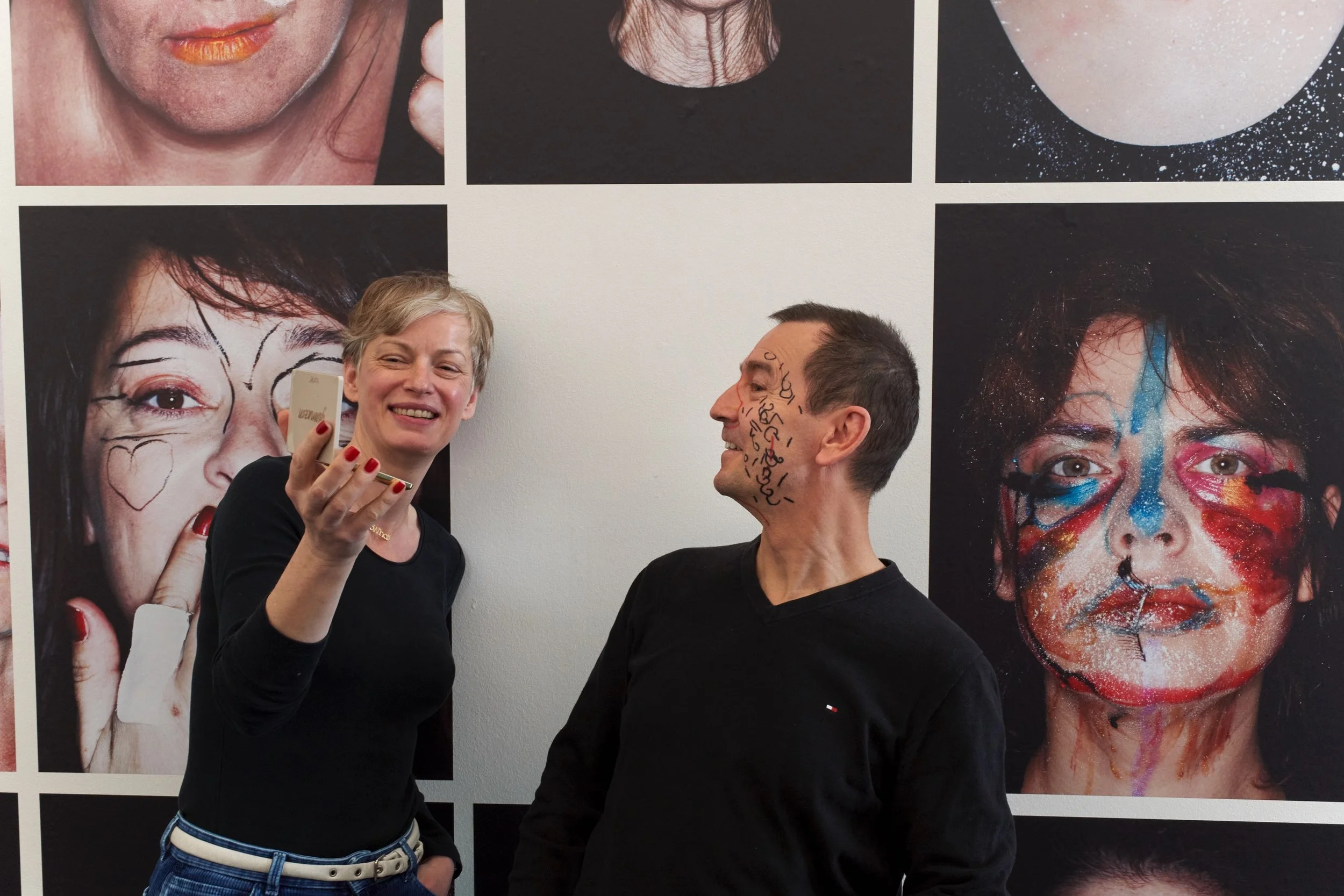
ID-Identity - after the session, have a look at your ID-Identity face (Photo: Dirk Hund)
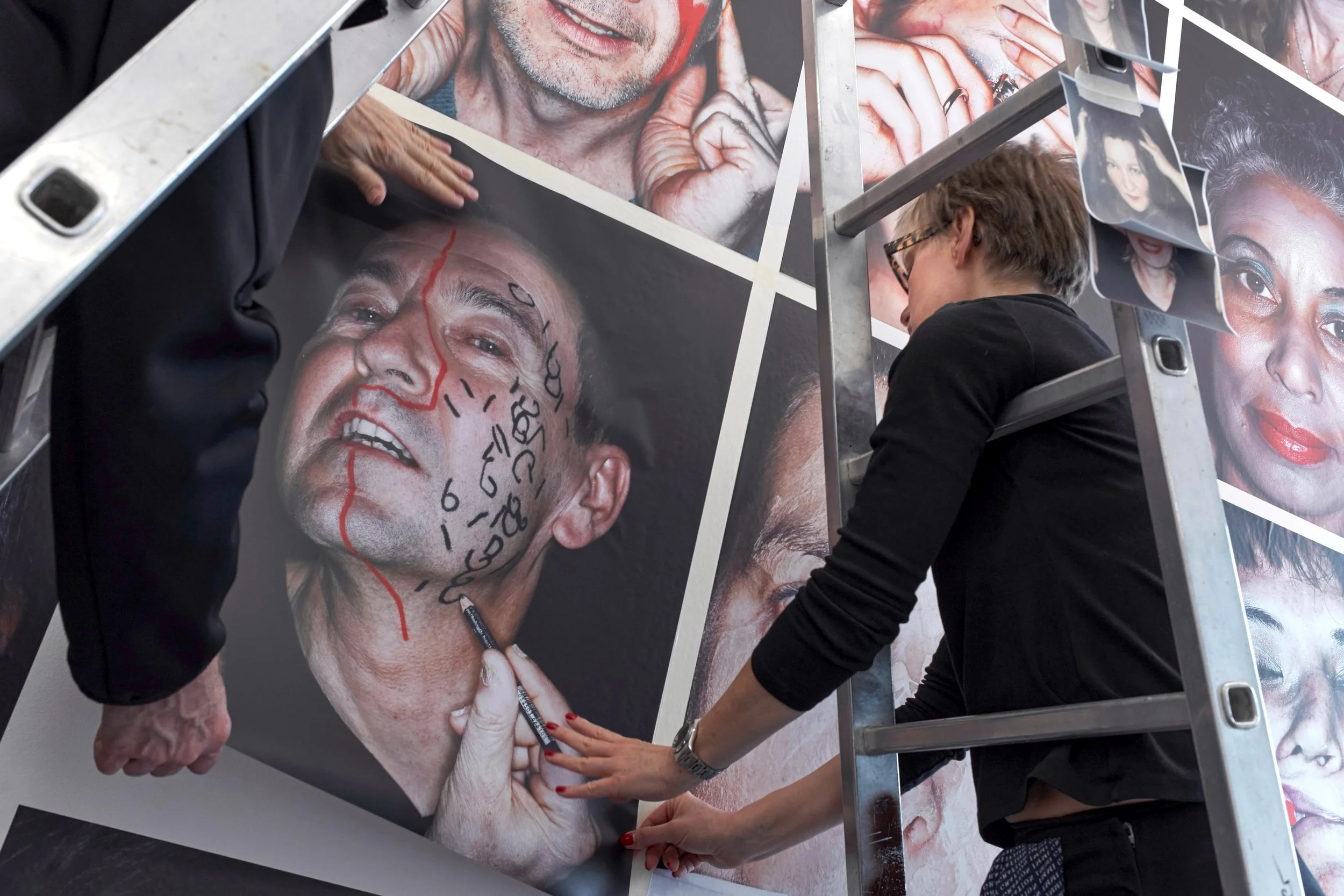
ID-Identity exhibition
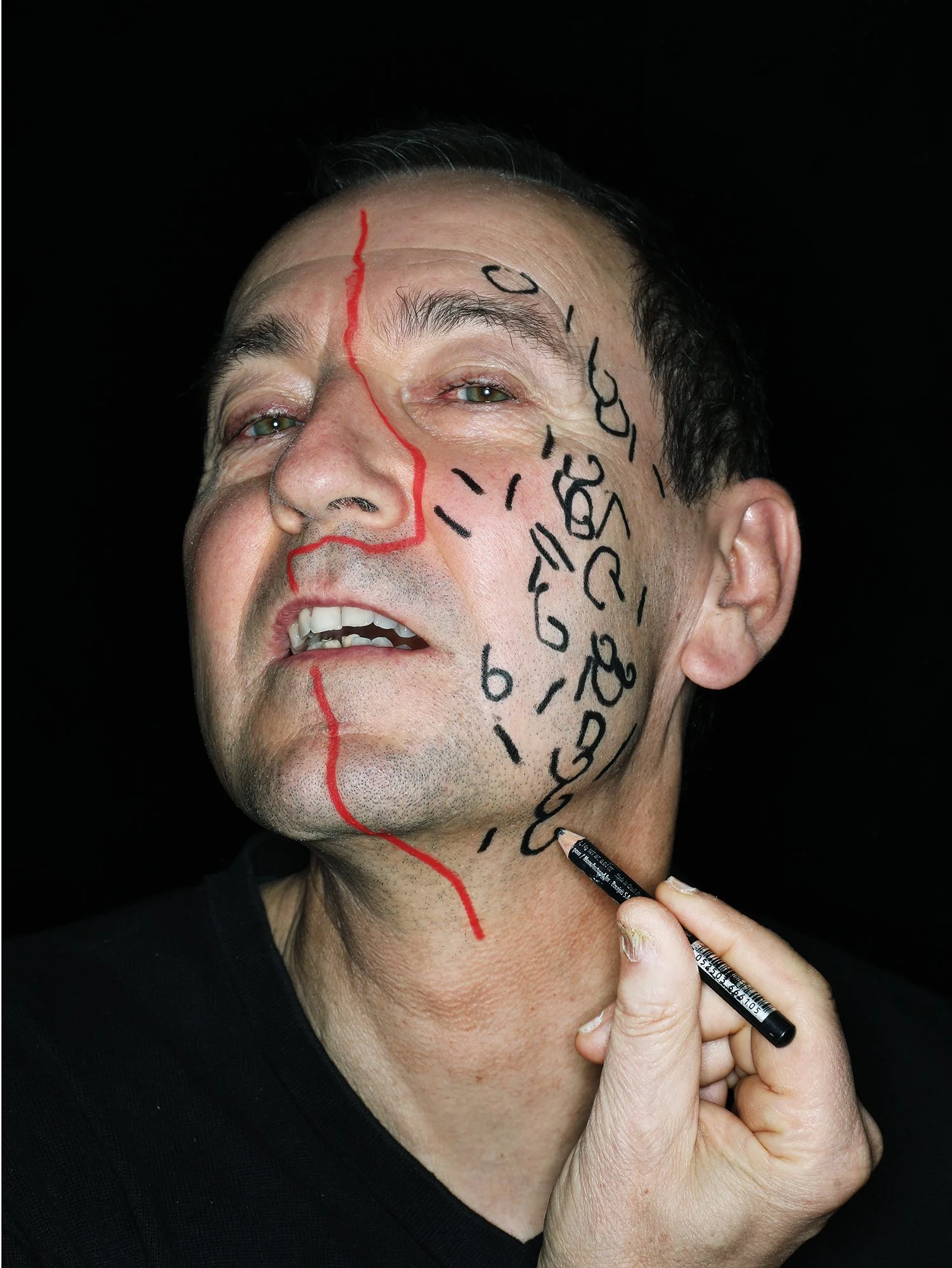
ID-Identity exhibition
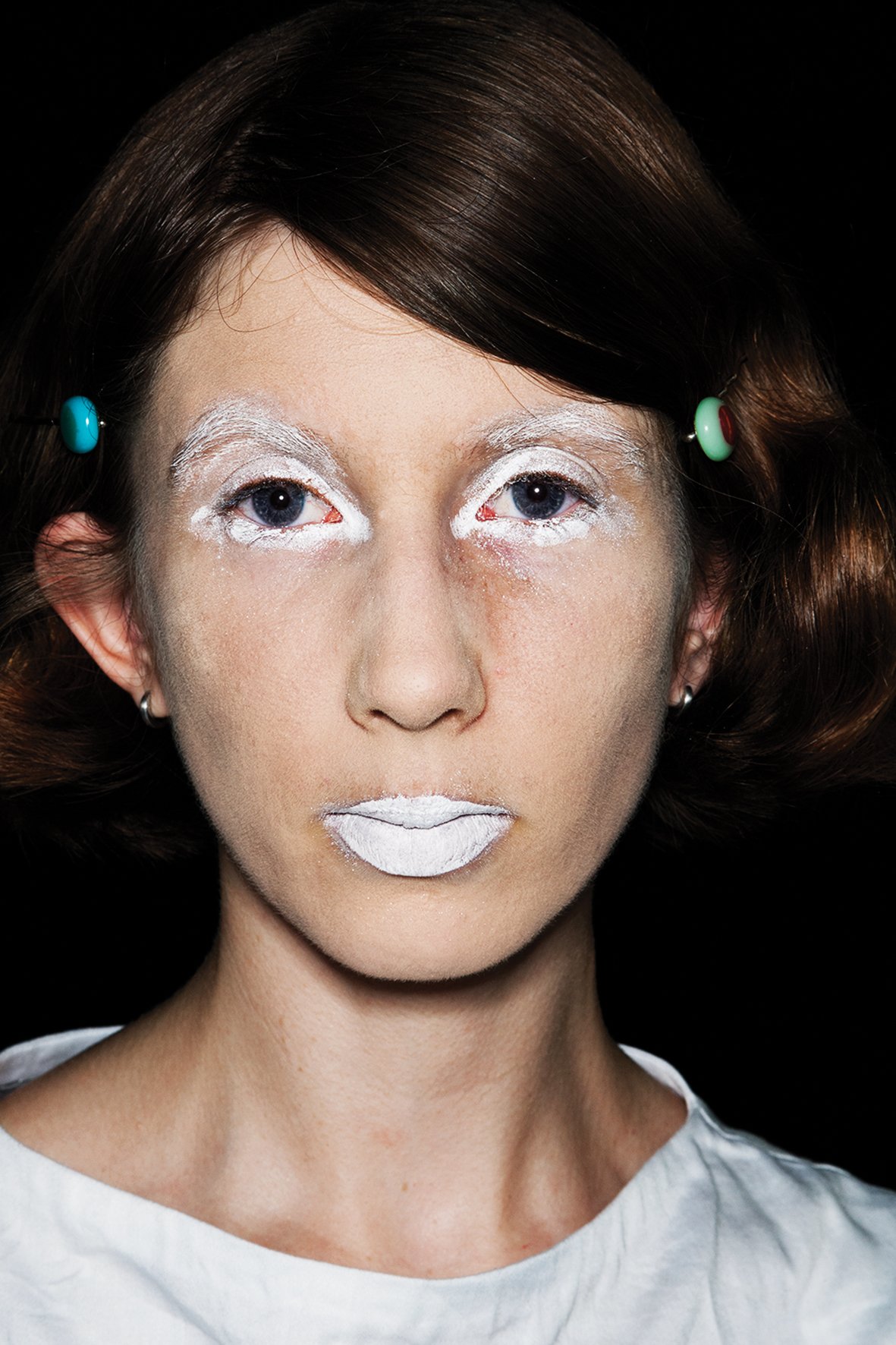
A participant proudly showed her private makeup entirely in white. She said: “This is how I walk around at home, because I really think I look beautiful like this. But when I go out on the street like this, people stare at me.” How does it feel to let oneself go, to engage with a new and uncertain face, and to describe what this experience triggers within them? Especially in a generation that practically lives within the 8 x 15 centimeters of a smartphone, with photo filters, avatars, and total distortion of reality. Should we all now look the same worldwide?
Through countless encounters in Asia, Europe, and the United States, in both urban and rural environments, an extensive archive of astonishing diversity has now emerged — and with every session and every workshop, it continues to grow and renew itself.
A gallery of faces, beauty ideals, gender roles, approaches to illness, and aging: ID-Identity paints an honest picture of our time
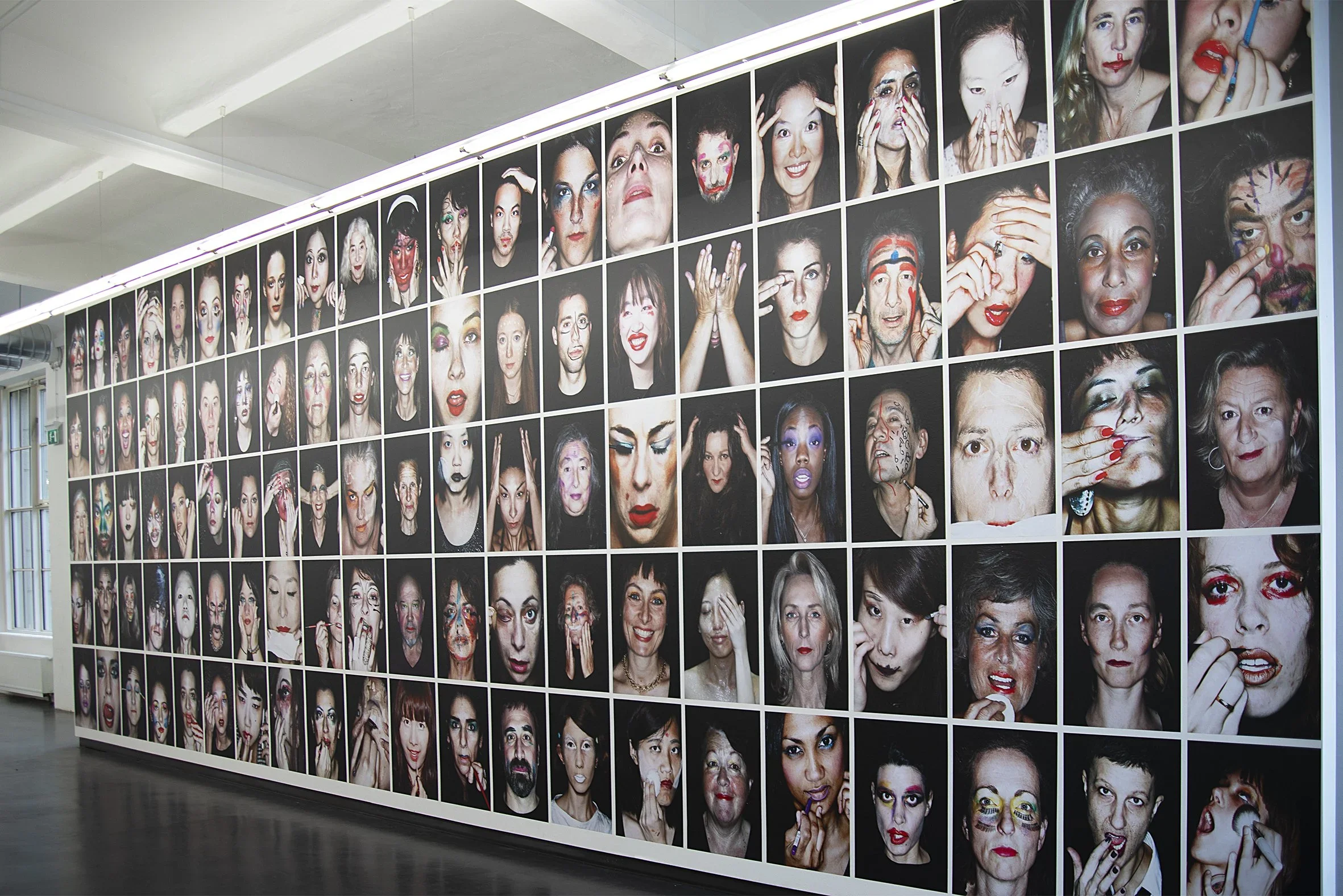
Wall with 105 ID-Identity works, „So What!” Kunsthalle H1, Augsburg, Deutschland, 2025
The portraits are also shown in exhibitions. The portrayed people therefore do not merely create their own self-portrait; they themselves become art — uncontrollable, yet exactly as they wish.
For the public, the portraits raise questions: Who is this person? Where does she or he come from? What is their gender, sexual orientation, age? What is considered ugly, what is considered beautiful? The images provoke reflection: are we fascinated by this, or disturbed by it — and if so, why?
© SusanneJunker 2026