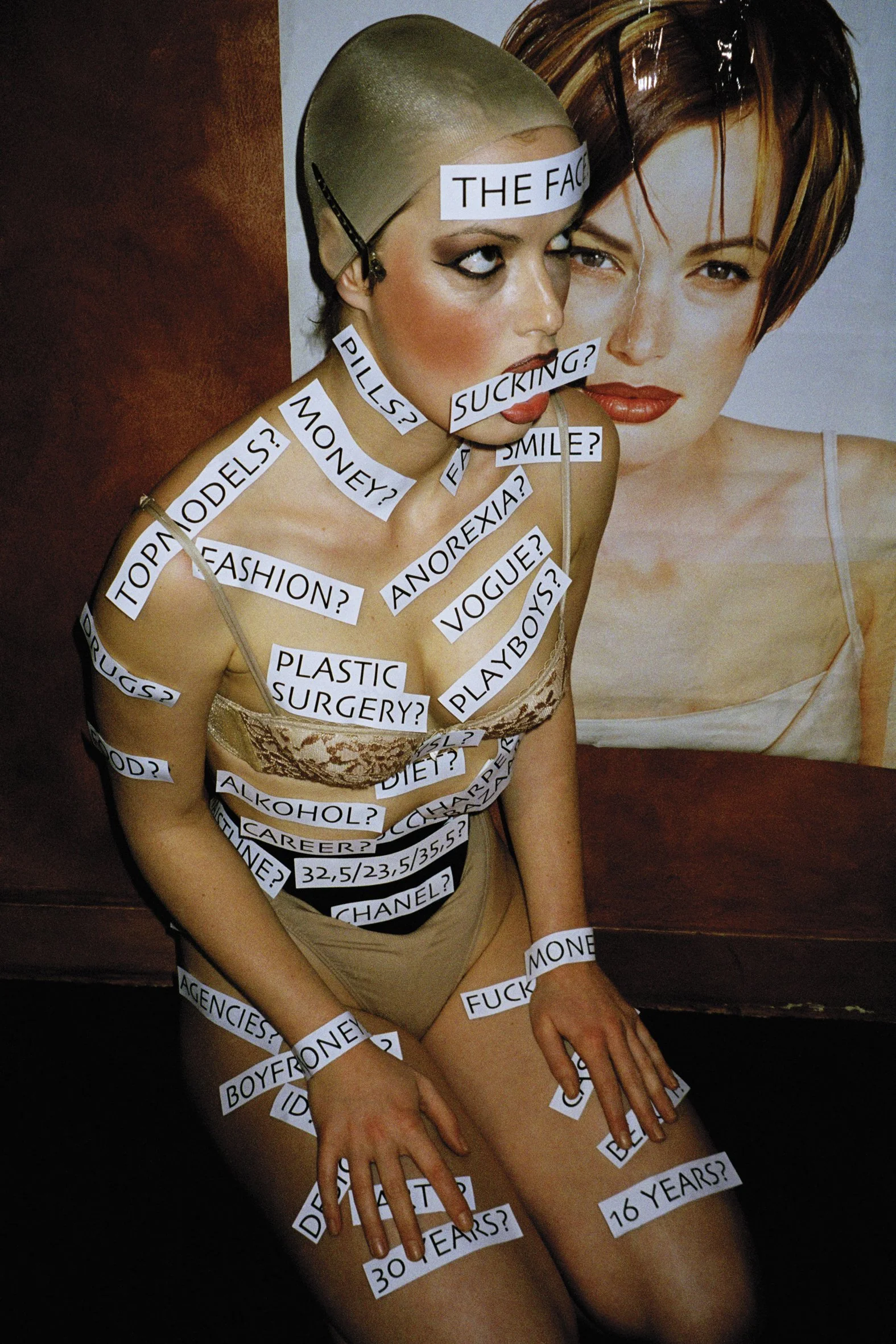
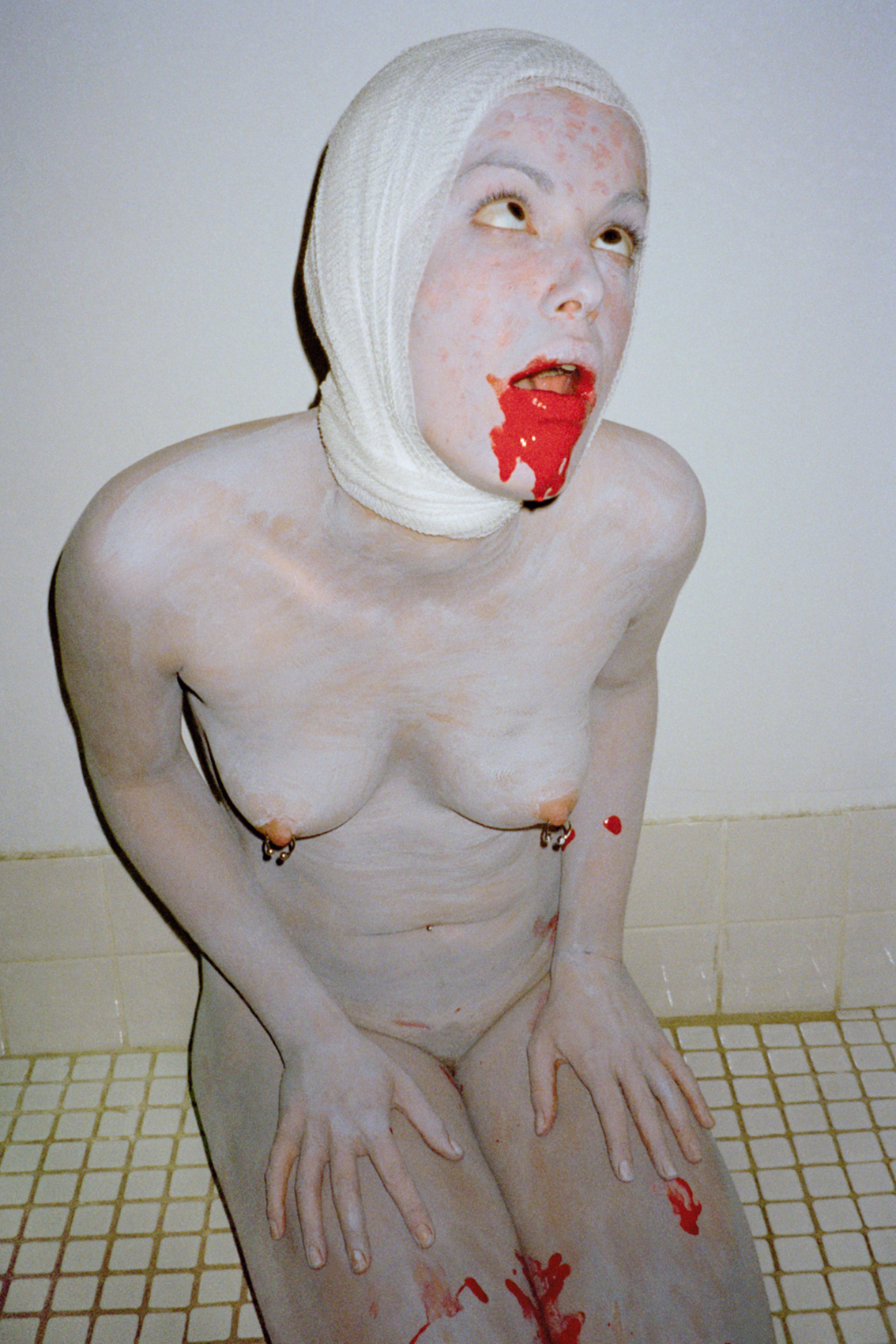
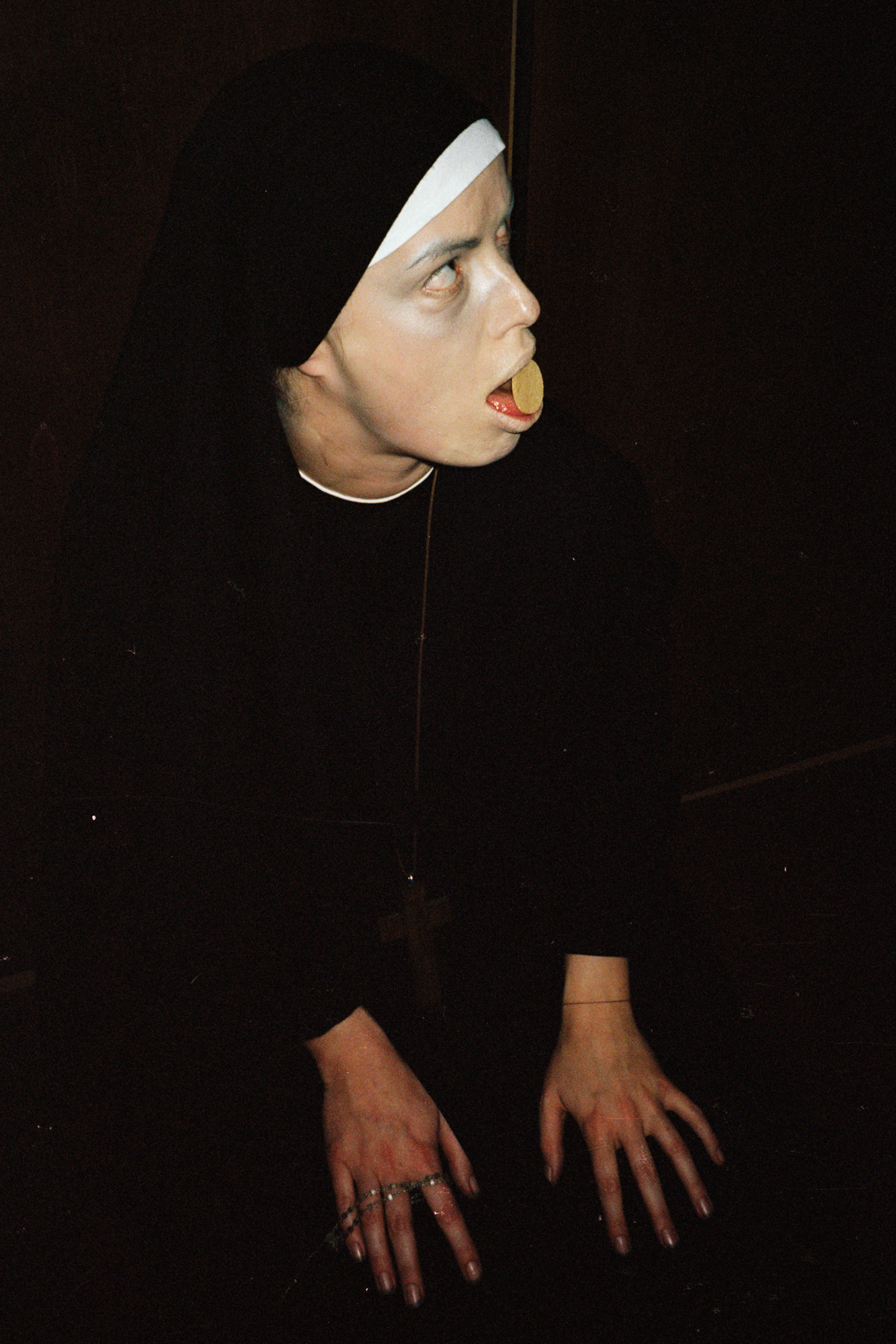
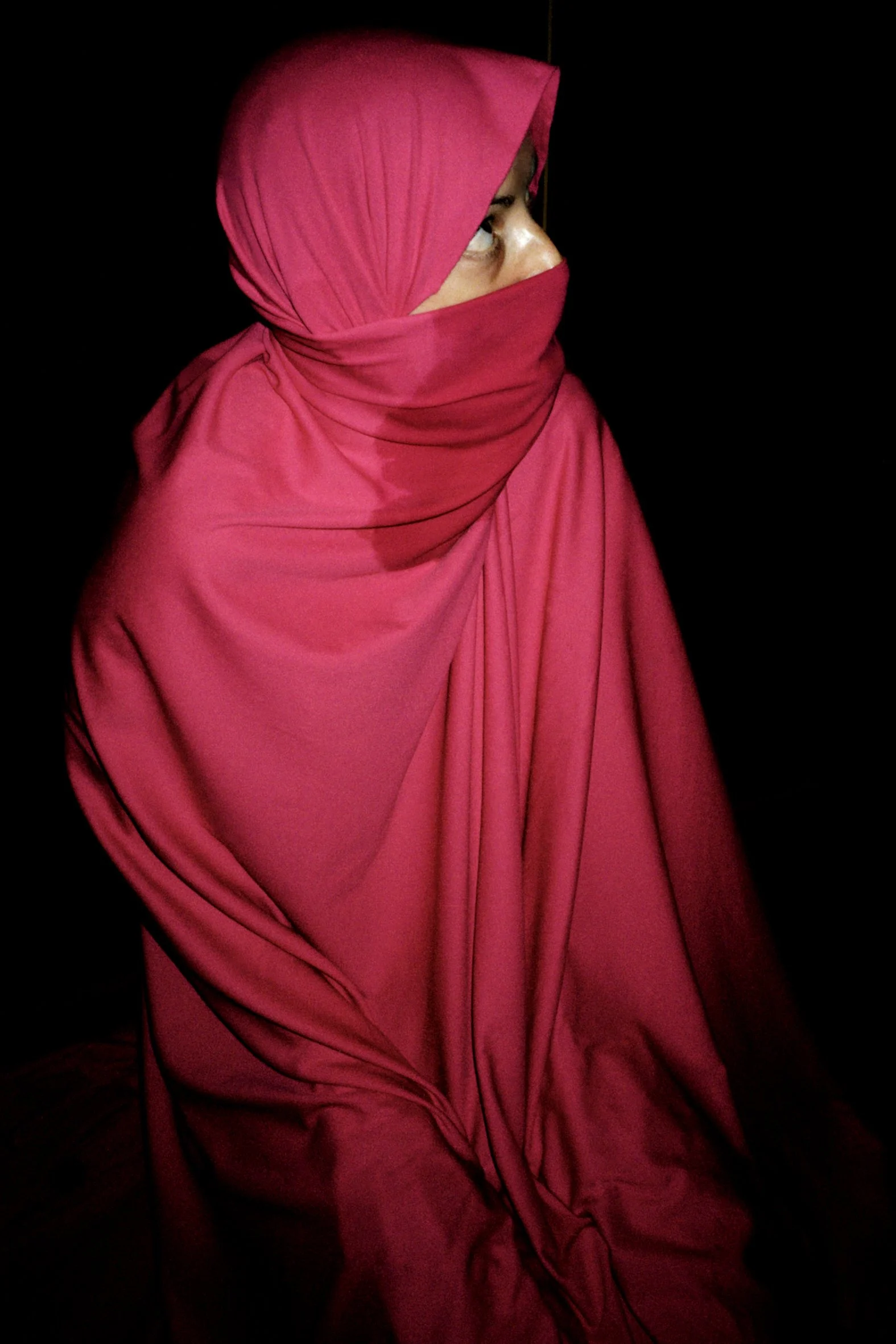
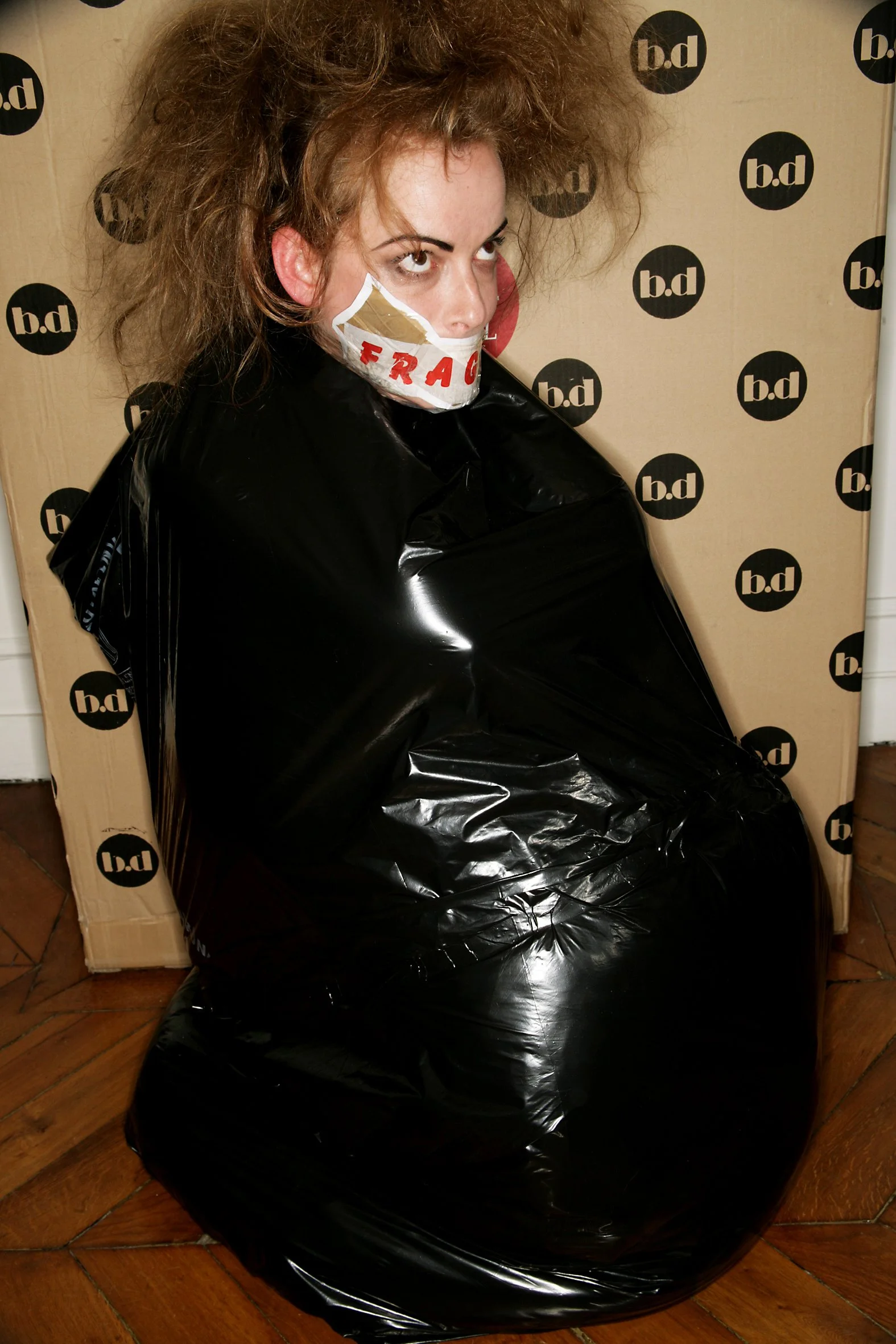
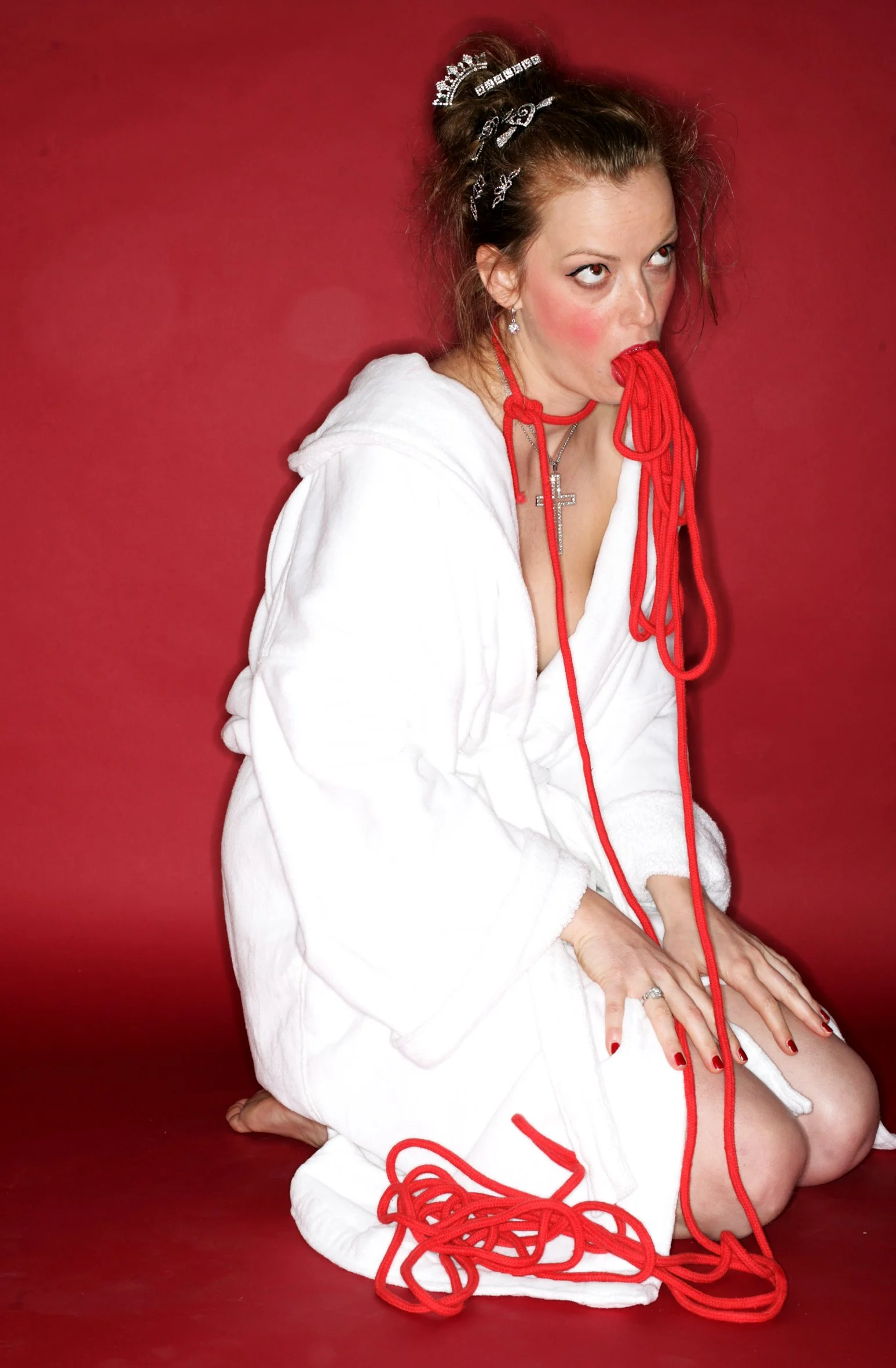
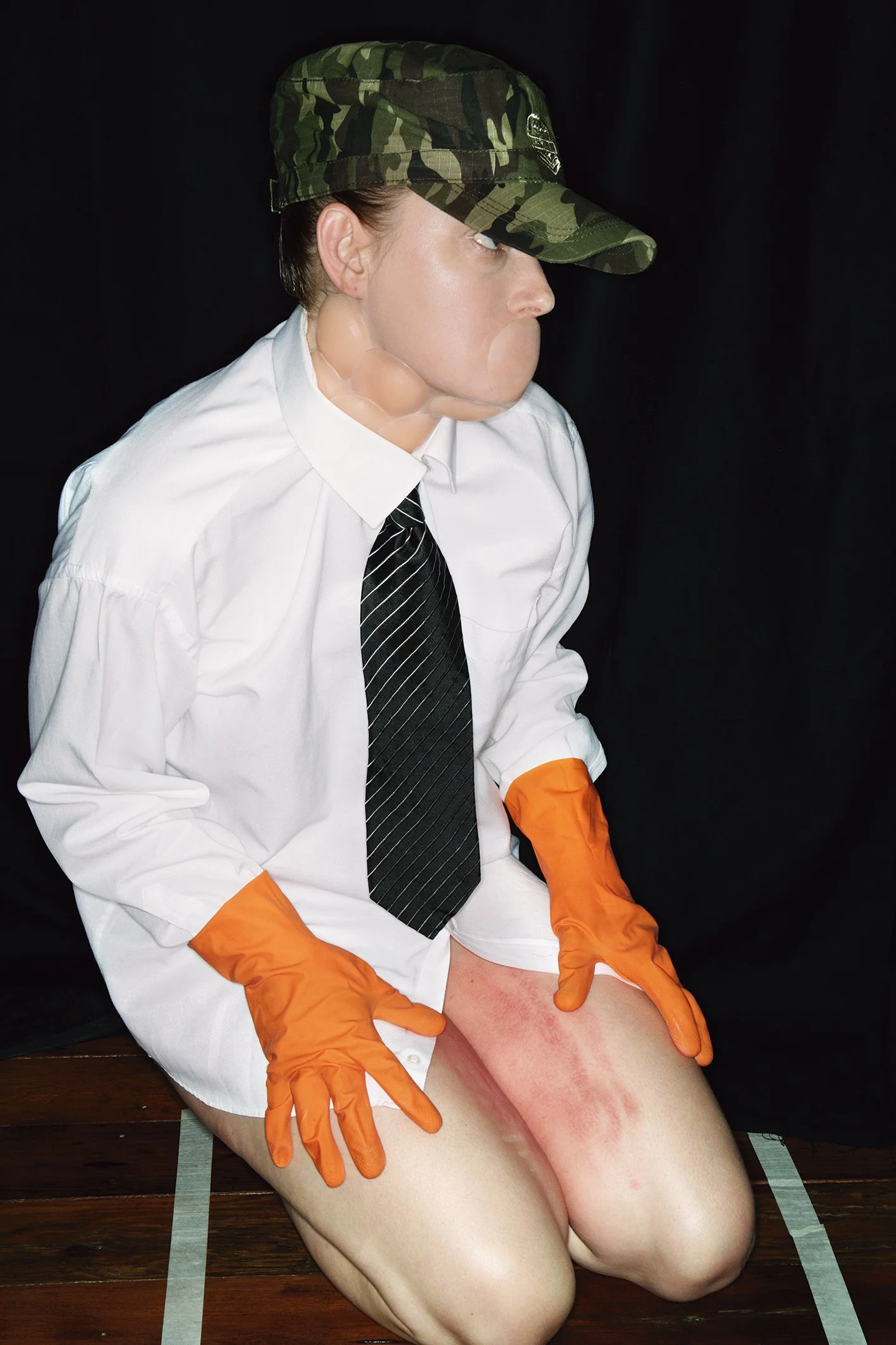
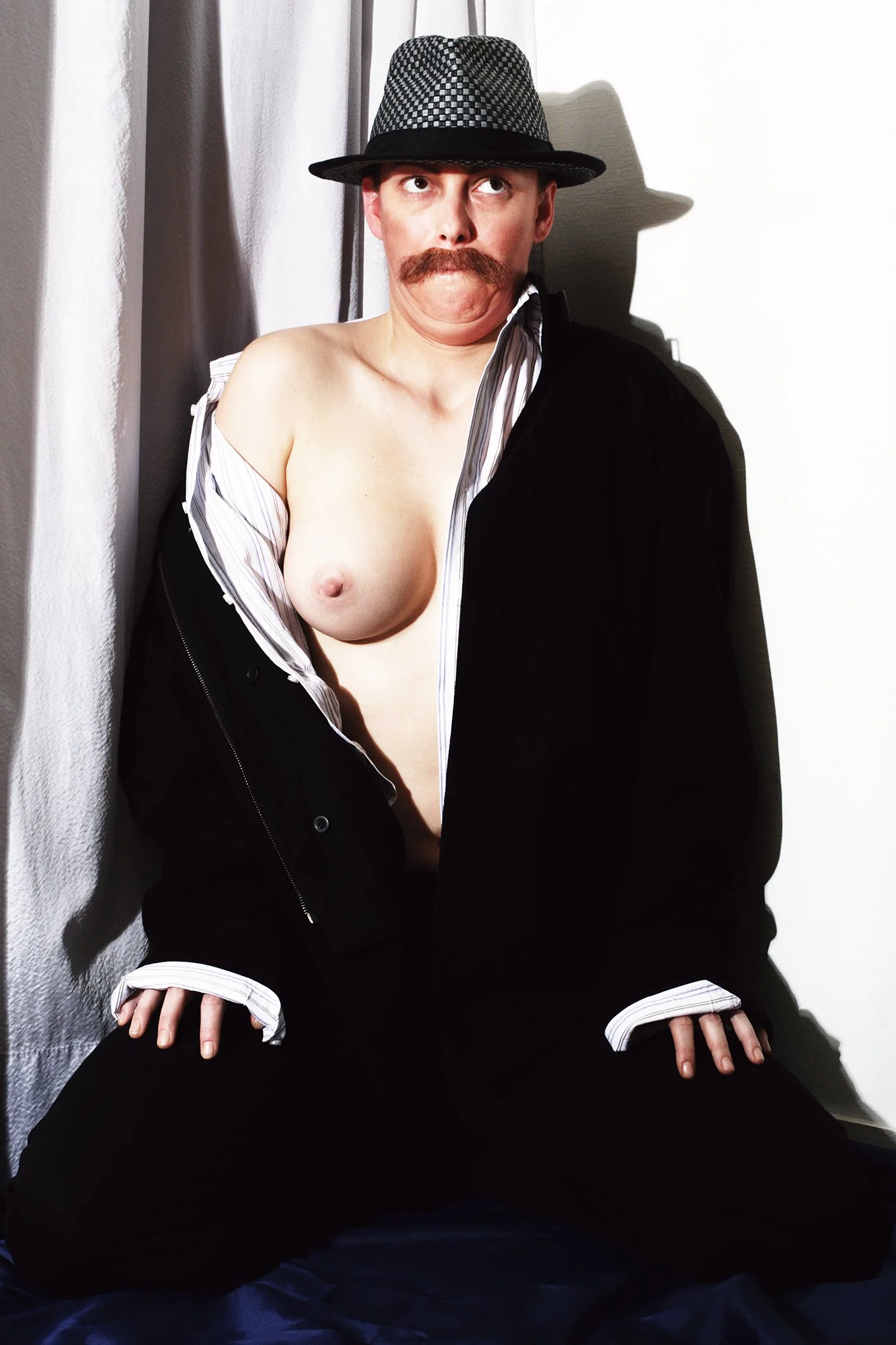
FIGURE FOR THE BASE OF A CRUCIFIXION 

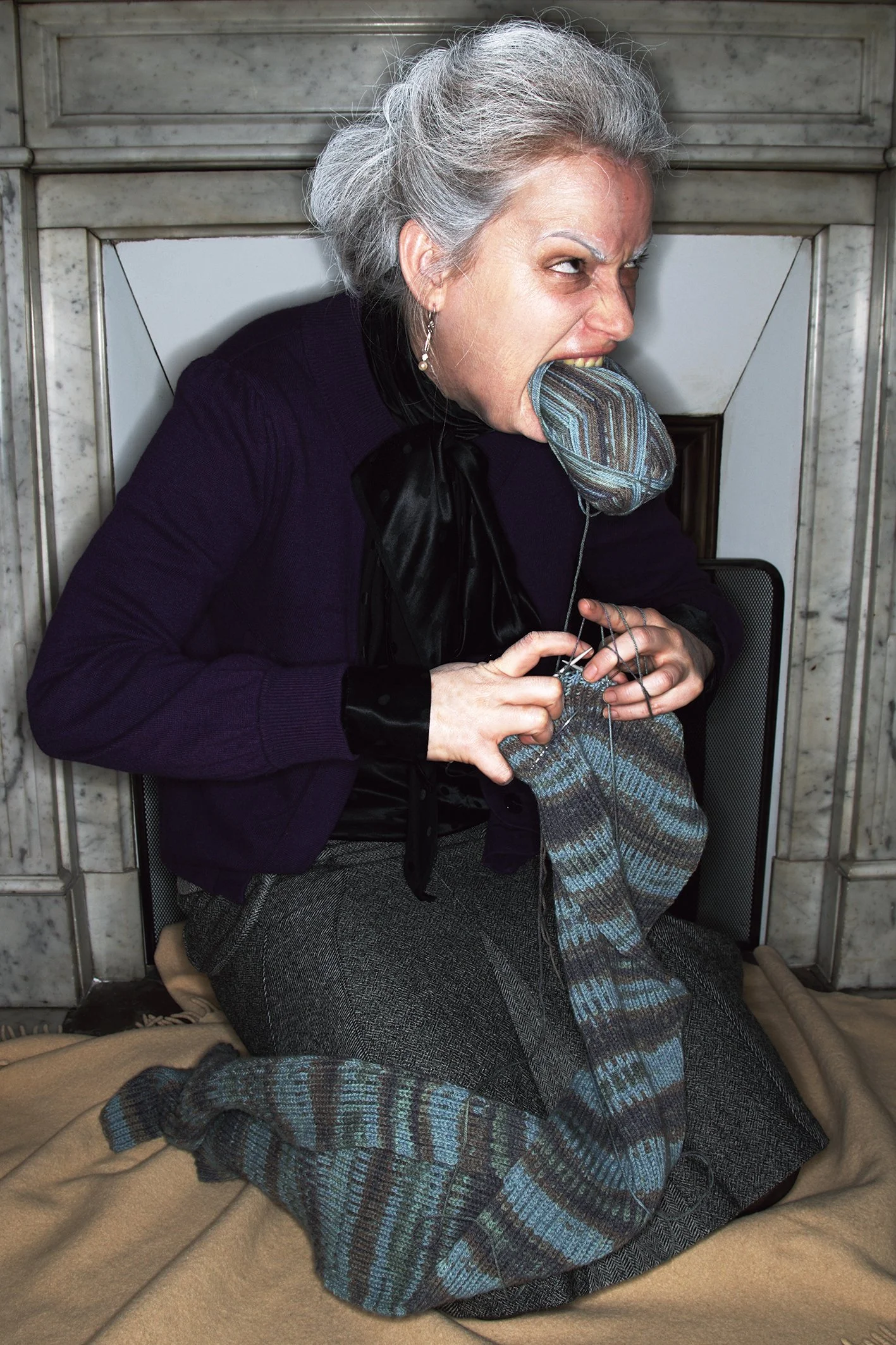
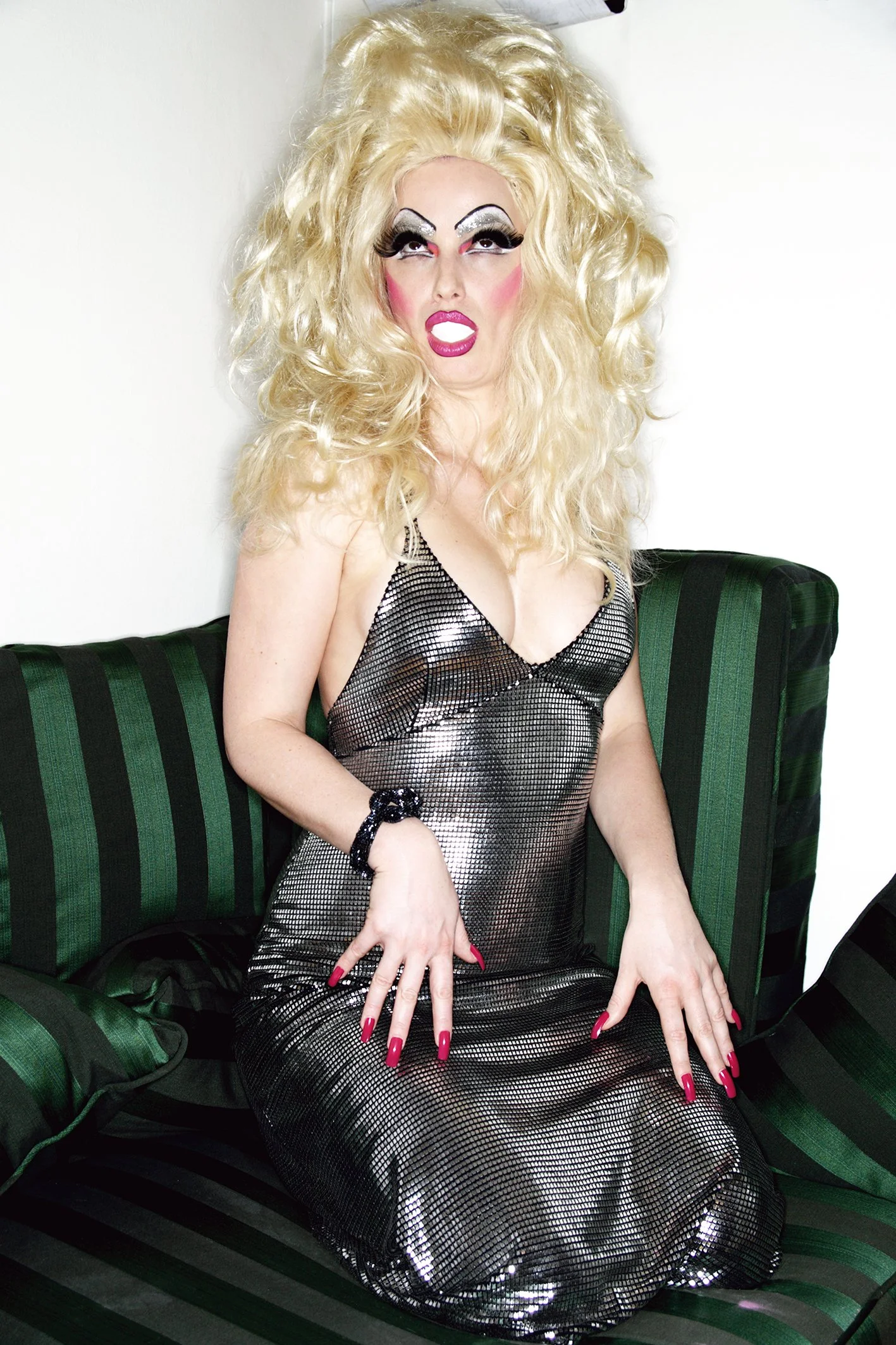
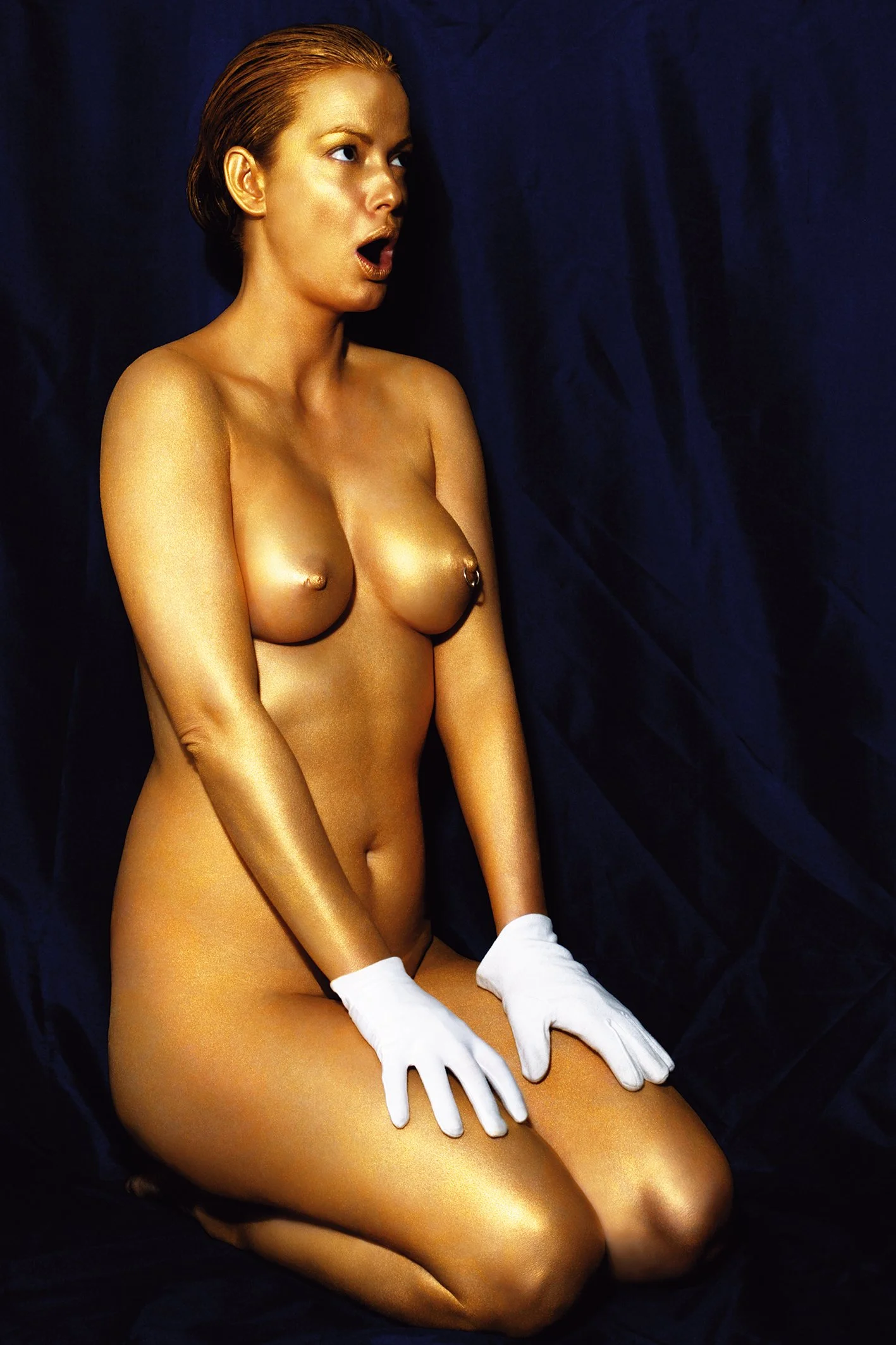
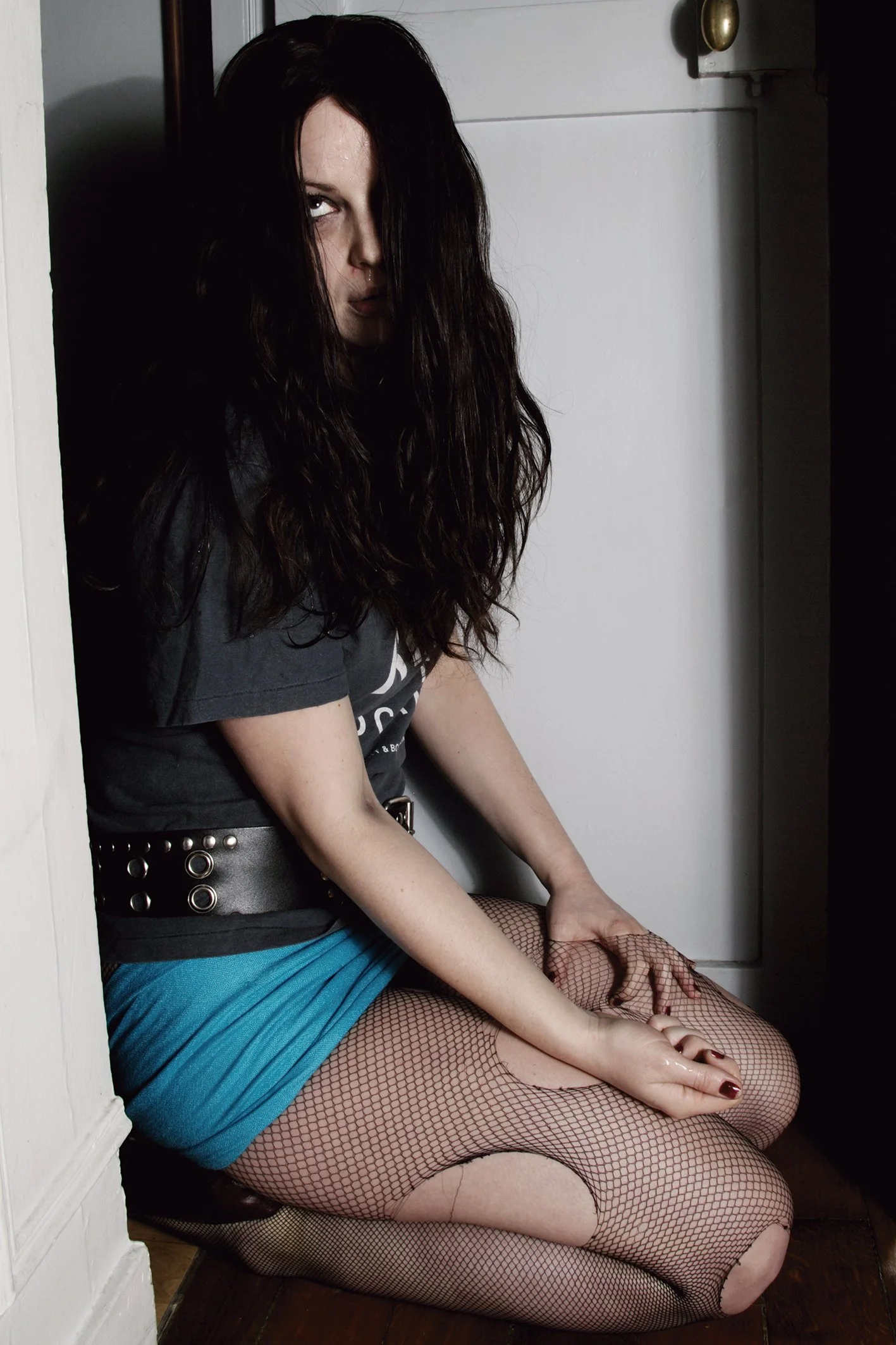
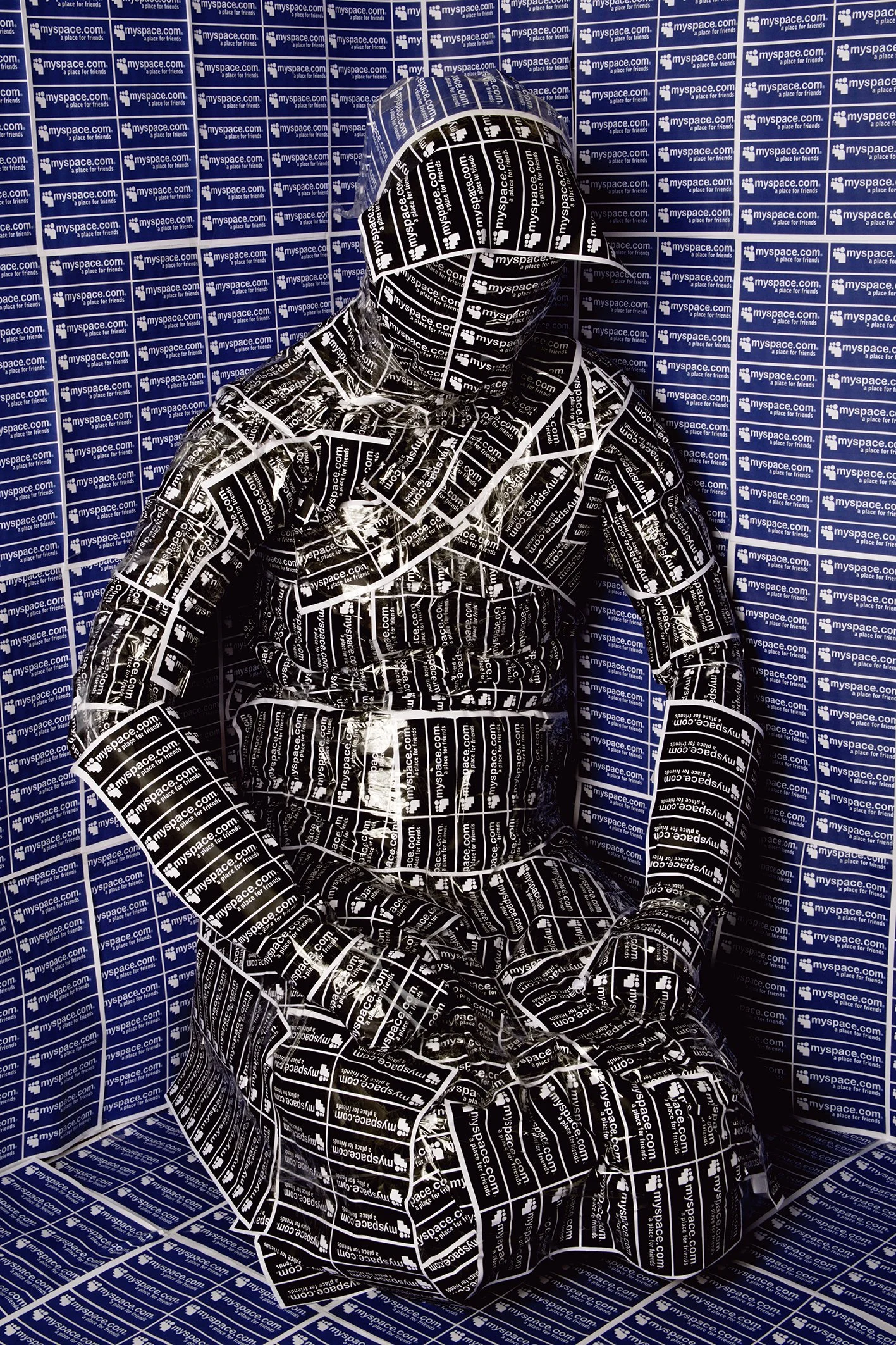
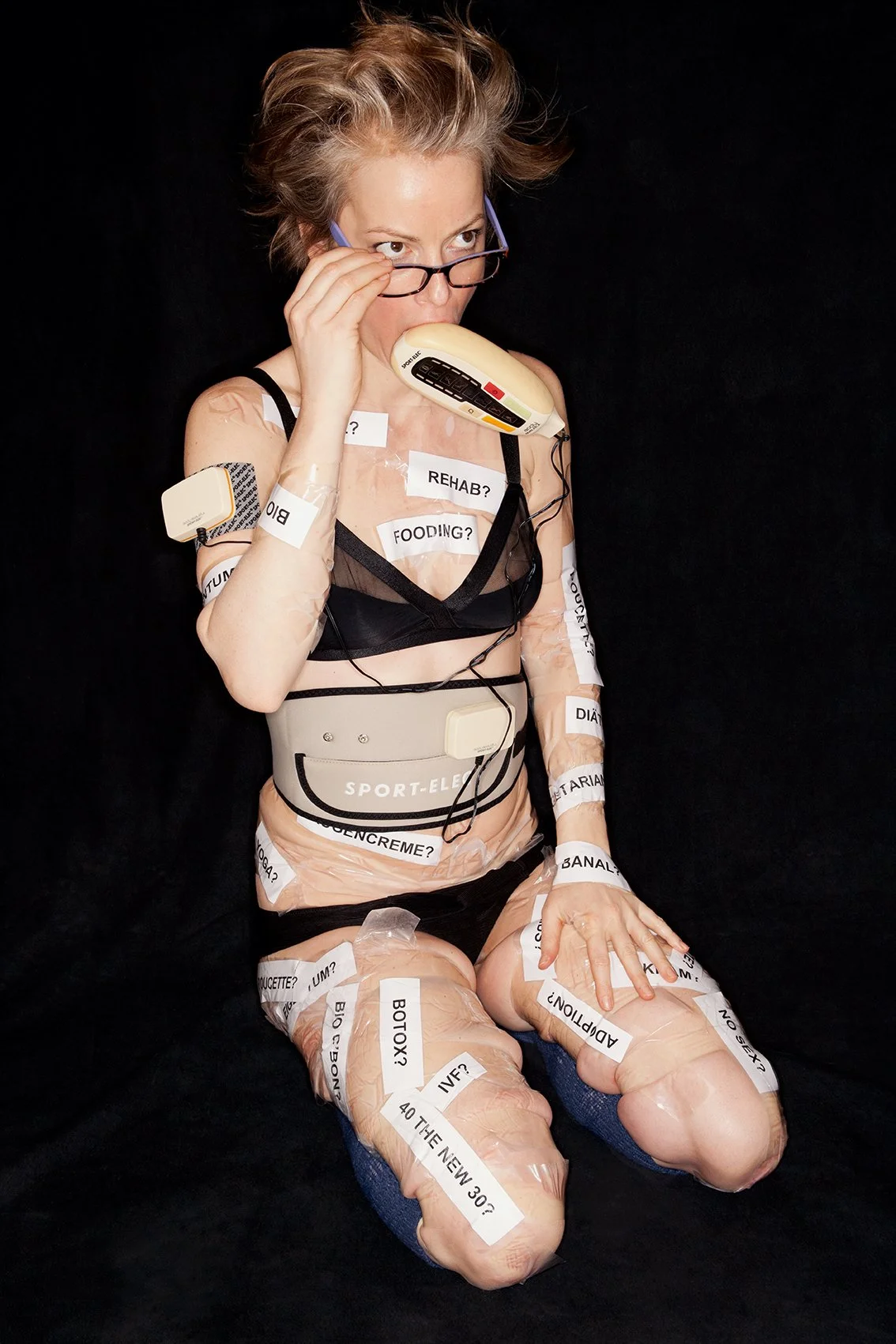
In 1999, I shot the first Figure for the Base of a Crucifixion, a self-portrait. Since then, the series has accompanied me throughout the years,

reflecting my evolving life situations and creative processes, and serves as the foundation of my work.

In my recent work, I examine digital communication, the representation of women, contemporary discourses on sexuality, and the censorship of the female body through blur on social media (Figure #25). Drawing on emojis, sexting fragments, TikTok videos, Reels, and influencer quotes, I translate elements of online interaction into the physical realm, taking a deliberately anti-AI approach by transposing these symbols by hand, printing them and affixing them directly onto my body, and also including words on menstruation napkins, a product laden with shame, carrying its own charged history of bodily taboo and commercial reduction (Figure #24).

Figures #26 and #27 – R U on IG? explore digital communication around sexuality, desires, and longing, the so-called sexting. The real body, covered in pornographic messages, is reduced to a mere shell; the supposed maximum intimacy is unmasked as unbridgeable alienation and interchangeability. The back view of Figure #27 – R U on IG? with "I just kissed my screen" reveals a shattering sense of lostness and absolute loneliness.

In my works Figure #28 – TikTok and Figure #29 – The Matrix, I address misogynistic hate speech, such as that seen during the last US election campaign with slogans like "Your body. Our choice“, as well as the Manosphere: the interconnected online subcultures of men including MRAs (Men's Rights Activists), PUAs (Pick-Up Artists), Incels (Involuntary Celibates), and MGTOWs (Men Going Their Own Way). I explore how these communities promote the belief that all women are hypergamous (always seeking a higher-status partner), that men are oppressed by feminism, and how they fantasize about humiliating, controlling, and dominating women.

In Figure #30 – Tradwife, I examine the carefully curated, supposedly perfect domestic world of Tradwives, promoted by countless influencers who celebrate domesticity: from bread-baking to child-rearing for their followers. In doing so, they normalize a retrograde, conservative worldview that simultaneously serves as a highly lucrative business model for themselves.

In these self-portraits, my body becomes a projection surface for digital practices, making invisible forms of language visible. The contrast between colourful emojis, intrusive text fragments, words on menstruation napkins, and the female body highlights its persistent reduction to a site of projection and commodification, an advertising surface shaped by contemporary media culture. These works show front and back views, thereby becoming three-dimensional photographic sculptures that demand space. The viewer is forced to walk around them, they are deliberately uncomfortable.

Previous
Previous

Figure for the Base of a Crucifixion 2023 - 2026

Next
Next

The Perfect Woman